Global Catastrophes
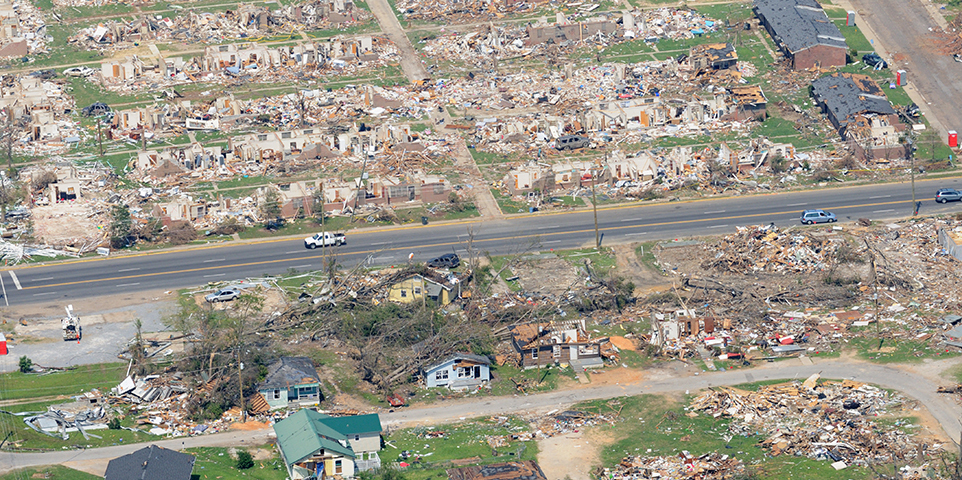
- Insured losses from natural catastrophes totaled $130 billion, 76 percent above the 21st century average, and 18 percent higher than 2020, according to the 2021 Weather, Climate and Catastrophe Insight report from Aon.
- Hurricane Ida was the largest insured loss event in 2021 and the fourth costliest hurricane on record with $36 billion in insured losses.
- There were 20 billion-dollar insured loss events in 2021, the fourth highest on record. Insured losses of $17 billion from winter weather, was the costliest on record for this peril.
- The $13 billion insured losses from European floods was the costliest disaster on record for the continent. Aon noted that roughly 38 percent of global economic losses were covered by insurance, translating to a protection gap of 62 percent.
- Natural catastrophes in 2021 resulted in a total global economic loss of $270 billion, according to Swiss Re’s sigma report. Of those global economic losses, only $111 billion were actually insured. (Aon’s and Swiss Re’s figures differ because of different collection methods and criteria for classifying events).
- According to the Swiss Re sigma report, man-made disasters totaled $10 billion in 2021, of which $8 billion were insured.
- Marsh publishes a biennial report on the 100 largest losses in the hydrocarbon industry which summarizes the largest property damage losses from the hydrocarbon extraction, transport, and processing industry between 1974 and 2021.
Nuclear incidents
The International Atomic Energy Agency (IAEA) rates the severity of nuclear incidents on the International Nuclear and Radiological Event Scale (INES) from one (indicating an anomaly) to seven (indicating a major event). The scale considers an event’s impact based on three criteria: its effect on people and the environment; whether it caused unsafe levels of radiation in a facility; and if preventive measures did not function as intended. Scales six and seven designate full meltdowns, where the nuclear fuel reactor core overheats and melts. Partial meltdowns, in which the fuel is damaged, are rated four or five.
Insurance Catastrophe Loss Review: Oil Spills: View PowerPoint Presentation slides.